Practice that builds real problem-solving skills.

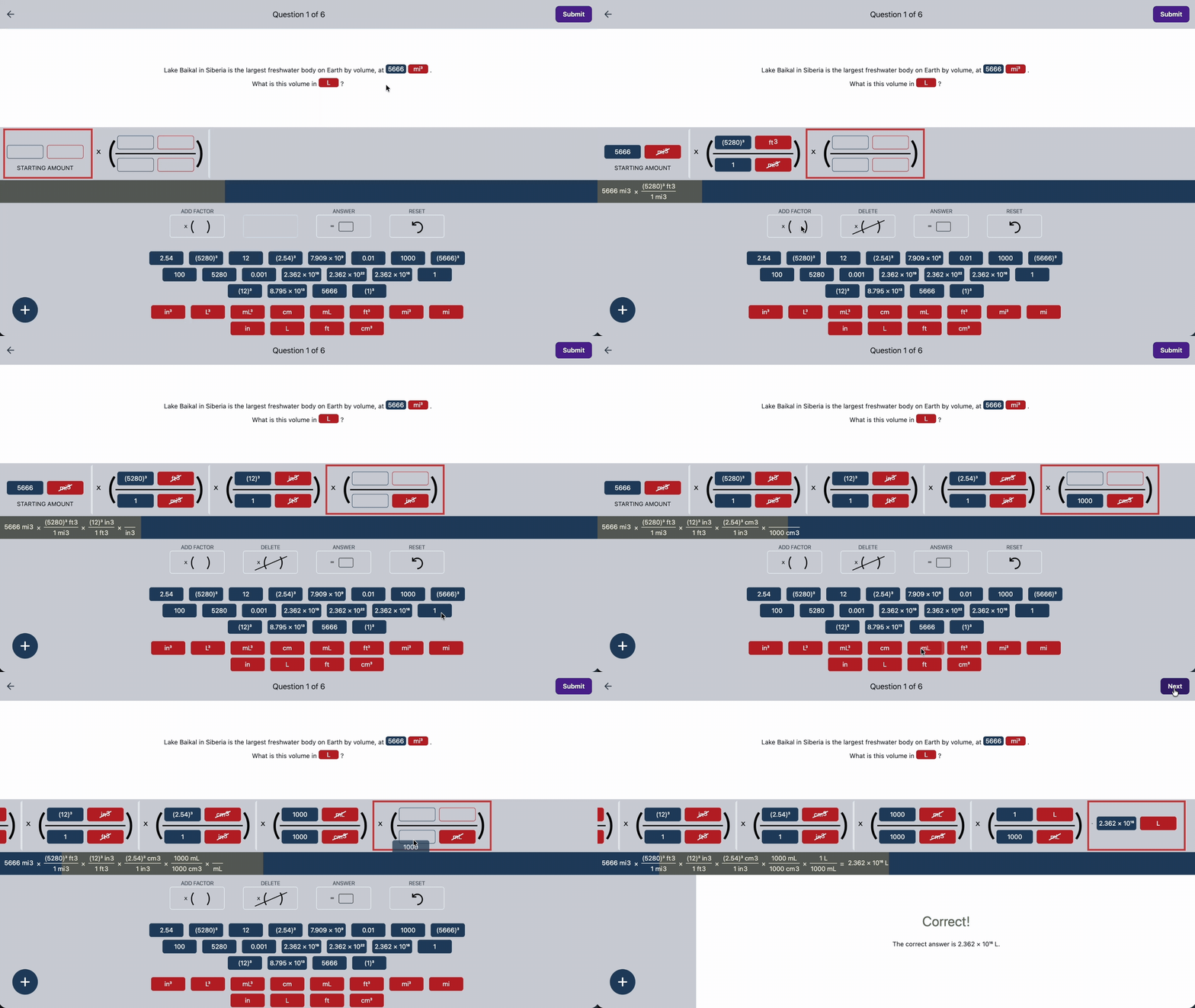
Animation shows a drag-and-drop style dimensional analysis problem in Aktiv Chemistry illustrating the setup of a question converting the volume of Lake Baikal from cubic miles to liters.

Solution: 5,666 mi³ = 2.362 x 10¹⁶ L

Most students reach for a calculator before they’ve mapped out a path to the solution. Aktiv Chemistry breaks that habit with interactive problems that encourage students to build their answers, one step at a time. This intentional input design, paired with targeted feedback, builds the skills that students need to succeed on unscaffolded numeric-entry problems.

Choose From Over 20,000 Problems & Activities

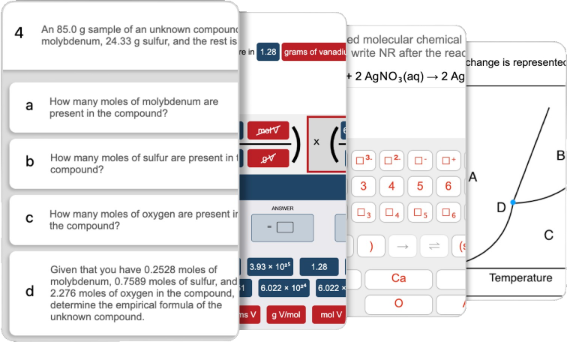
Pick and choose problems from an extensive library that supports all topics in General Chemistry. Specialized answer modules target common student pain points throughout the course and provide valuable visualization and scaffolding to improve understanding.

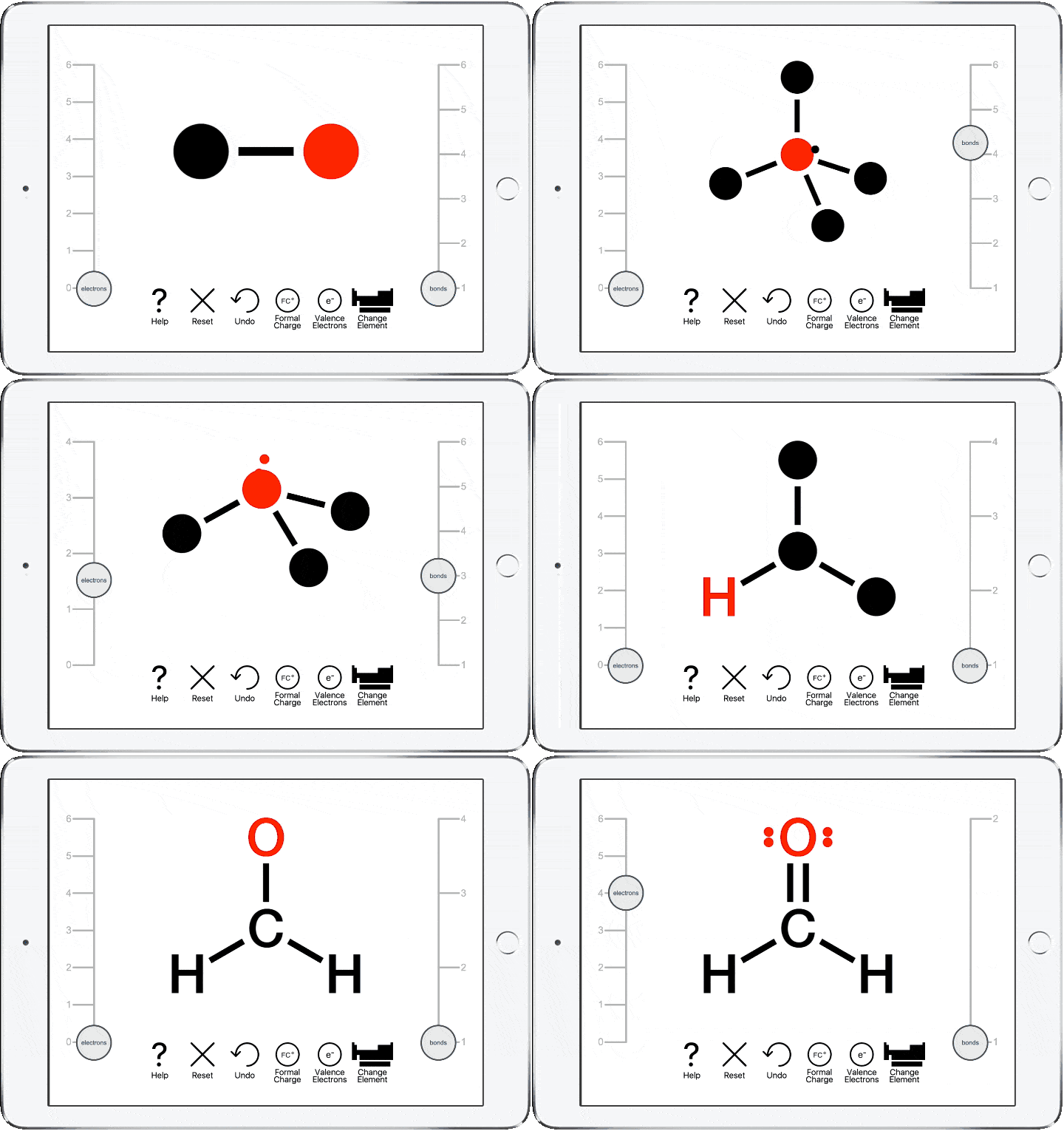
Students draw Lewis structures and visualize VSEPR with an intuitive, game-like interface that makes learning fun.
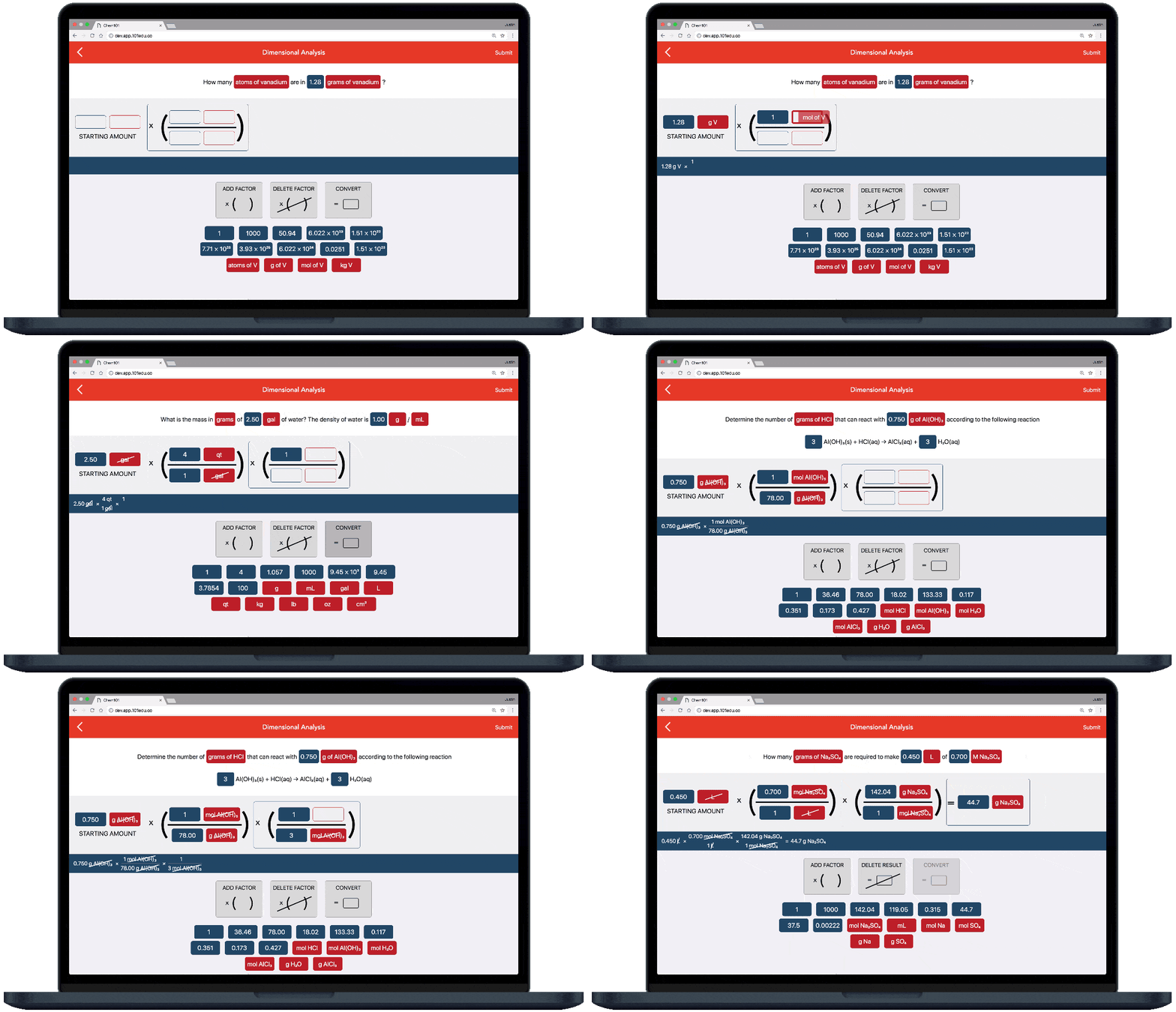
Students drag-and-drop tiles to set up scaffolded conversions with units, stoichiometry, densities, concentrations, and much more.
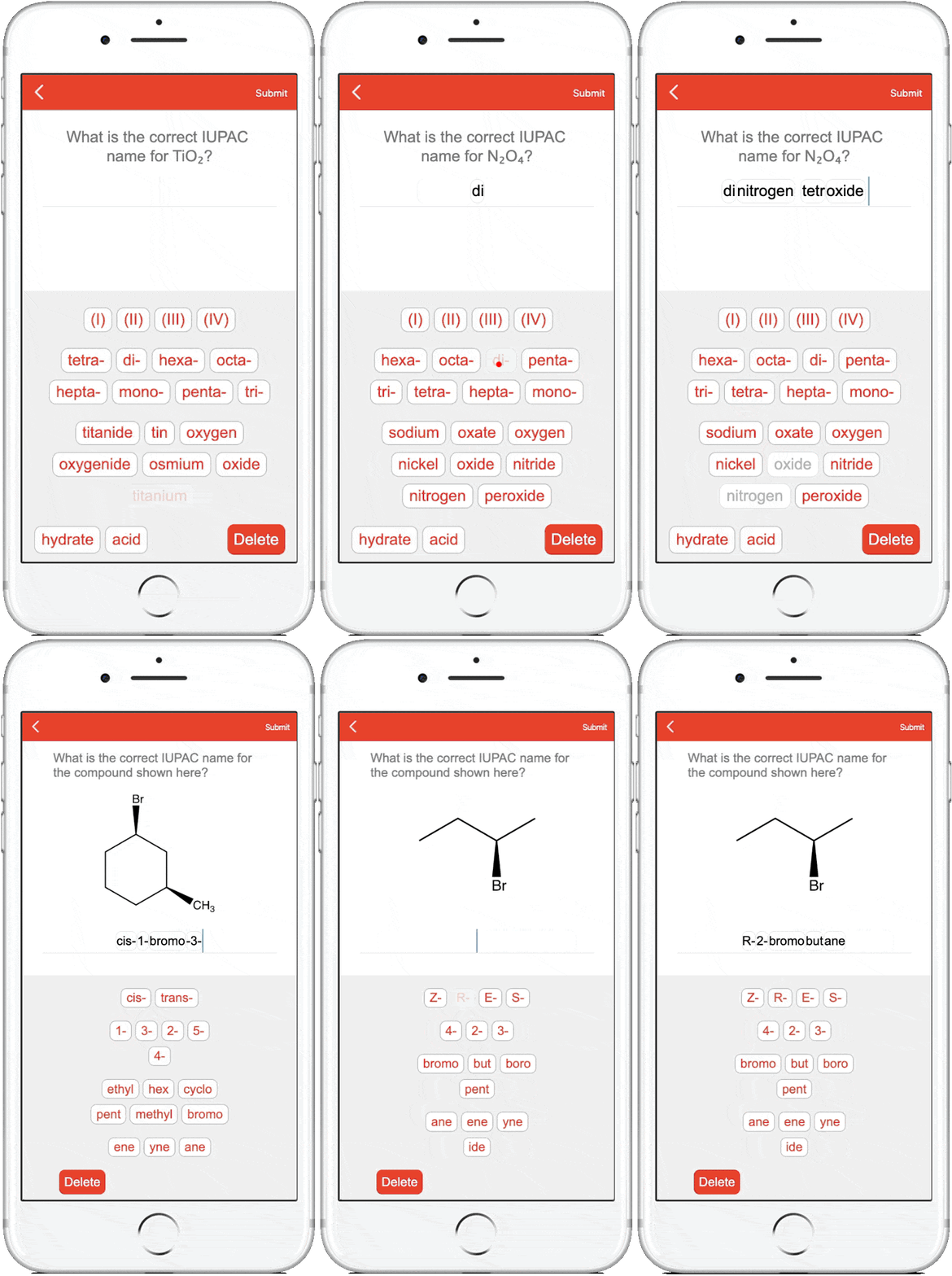
Lower the barrier to practicing nomenclature with a smart suggestion interface that tests students on the difference between ionic and covalent compounds, transition metals and charges, and more.
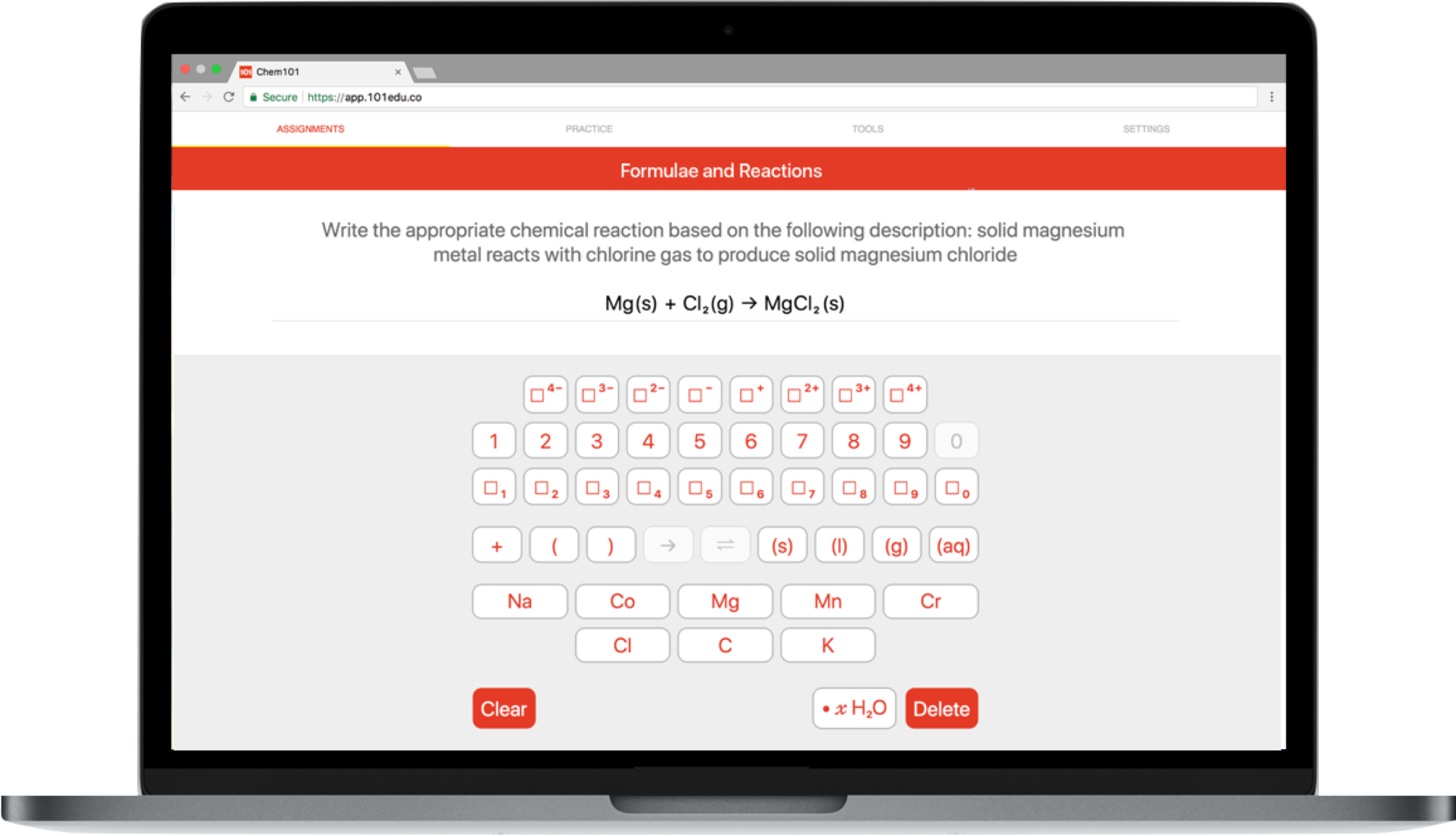
Students focus on chemistry and not syntax errors by easily writing chemical formulas, reactions, and equations with smart suggestions. Aktiv helps students reach mastery with exercises on balancing reactions, net ionic equations, acid-base reactions, redox reactions, and much more.
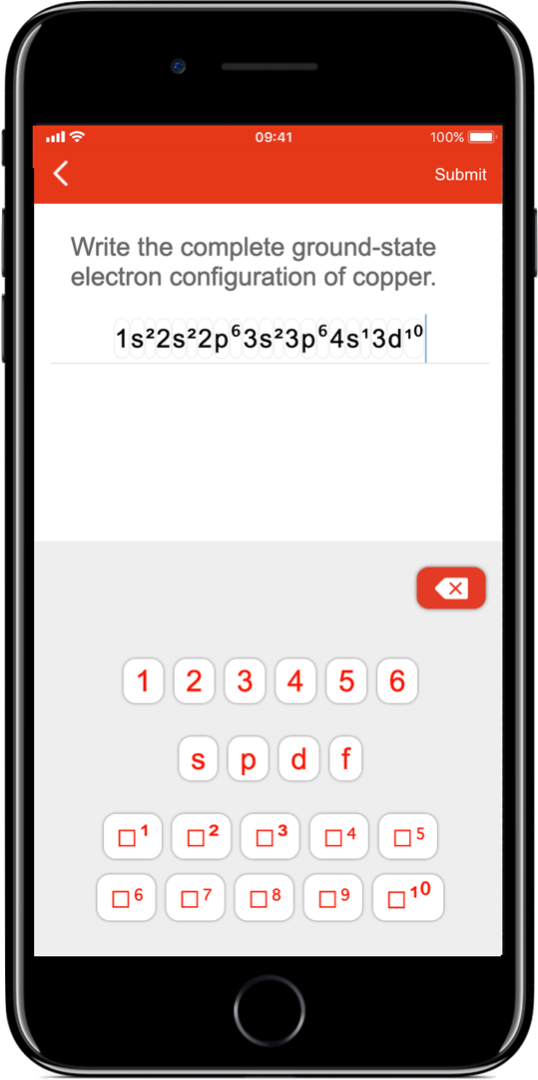
Students easily write ground state, excited state, and noble gas core configurations using smart suggestions.
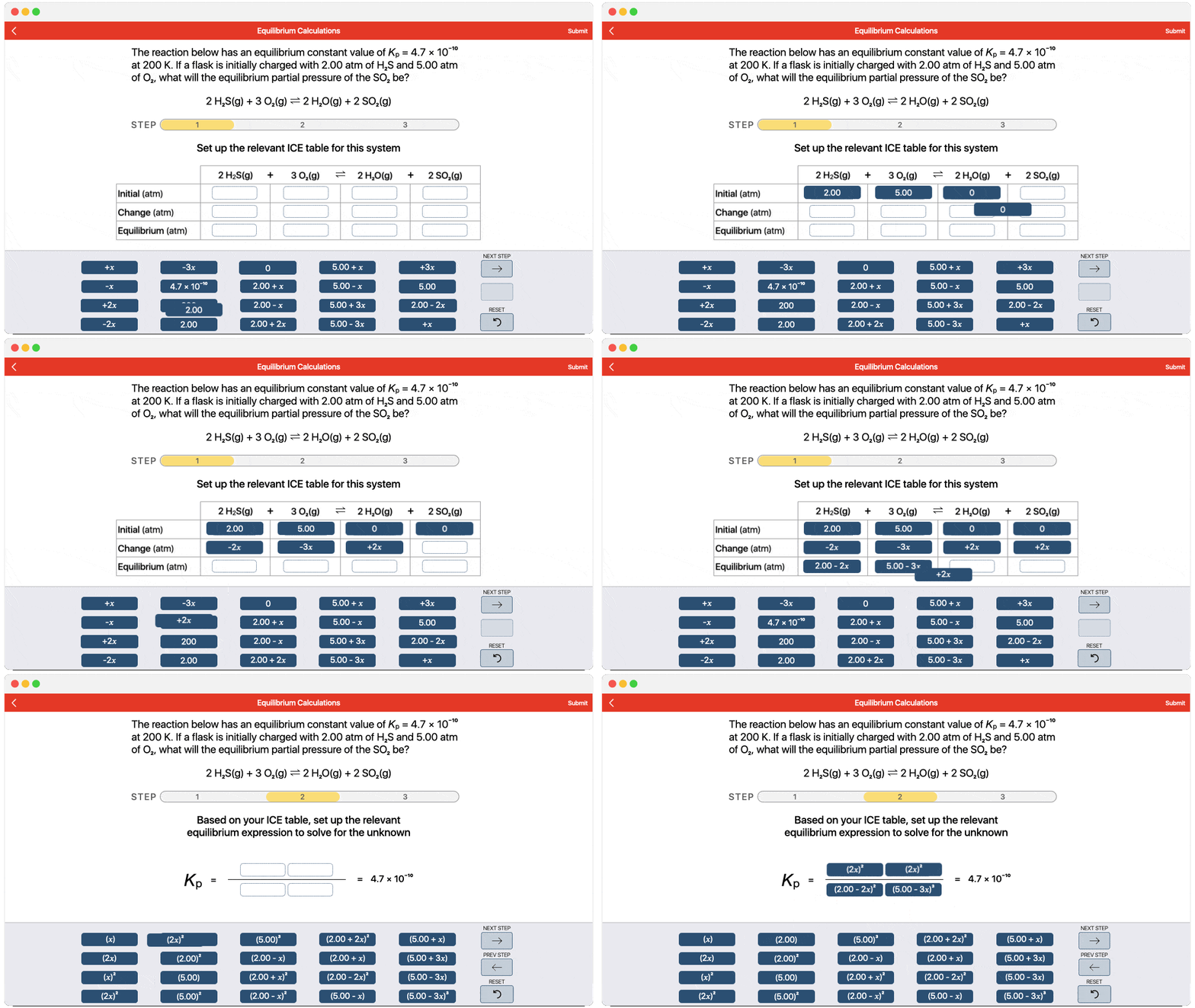
Scaffolded and step- by-step learning for chemical, weak acid-base, and solubility equilibria problems.

Smart Feedback with Chemical Intelligence

Every Aktiv Chemistry question contains targeted instructional feedback that provides students with helpful hints when they submit incorrect answers.

LEWIS STRUCTURES

Find mistakes in the octet rule, valence electron count, formal charges, and skeletal structure.

DIMENSIONAL ANALYSIS​

Find inverted conversion factors, wrong units, and calculation errors.

CHEMICAL EQUATIONS

Find mistakes in balancing, states of matter, IUPAC naming, and proportions of atoms.

Q: How many atoms are in 1.28 g of vanadium?

Try Again!
Watch your units! Your conversion factors between grams V and moles V in your first conversion factor needs to be flipped in order to cancel out the appropriate units and get to your desired answer. Invert or "flip" the conversion factor and then try again.

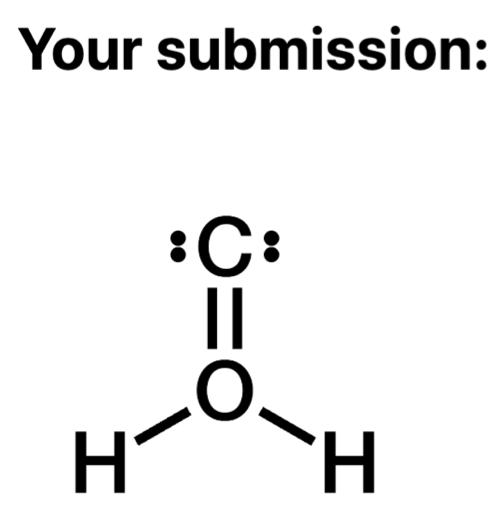
Q: Draw the Lewis structure of formaldehyde (H2CO)

Try Again!
You have submitted an incorrect skeletal structure. The chosen central element in your structure is incorrect.

Q: Write the IUPAC name for TiO2

titanium di oxide

Try Again!
Greek prefixes are unnecessary in ionic compounds because the proportion of the ions in the compound is implied by the charges of the ions.

Build Mastery with Multi-Part & Challenge Questions

Aktiv transitions students from the basics to the most rigorous of questions in General Chemistry. When coming to the end of the unit or preparing for the big exam, Multi-Part and Challenge Questions are there to help students synthesize multiple concepts and apply chemistry to scenarios from real life or the lab.

Ready to see how Aktiv can impact your course—and your students?

Learn more about the features, see a live demo, and get a free instructor playground account with access to the content library.